

Keynote speakers

Davide Rossi, Associate Professor, University of Bologna; Director of Research Line, Digital Design and Open Hardware, CHIPS-IT;
Title: Past, Present and Future of RISC-V: The PULP Perspective
Abstract:Open-source hardware has evolved from early experimental efforts such as OpenRISC and OpenCores into a major driver of innovation in digital systems. The emergence of the RISC-V instruction set architecture accelerated this transformation, enabling a global ecosystem of open and extensible processor platforms. Within this context, the PULP (Parallel Ultra-Low Power) platform has played a key role in advancing open hardware for energy-efficient and heterogeneous computing. This keynote will present the PULP perspective on the evolution of RISC-V and how open hardware has reshaped research in computer architecture and digital design. Finally, it will discuss the next step of this journey: transforming open research platforms into engines for technology transfer through initiatives such as Digital Design and Open Hardware Division in CHIPS-IT, supporting the growth of the Italian and European semiconductor ecosystem.
Bio: Davide Rossi received the PhD degree from the University of Bologna, Italy, in 2012, where he currently holds the position of Associate Professor. He is the Director of the Digital Design and Open Hardware Department at CHIPS-IT. His research focuses on energy-efficient digital architectures for heterogeneous and reconfigurable multi- and many-core systems-on-chip. This includes architectures, design and implementation strategies, and runtime support aimed at addressing performance, energy efficiency, and reliability challenges in both high-end embedded systems and ultra-low-power computing platforms, including aspects related to heterogeneous integration. In these research areas, he has authored more than 100 papers published in international peer-reviewed conferences and journals.
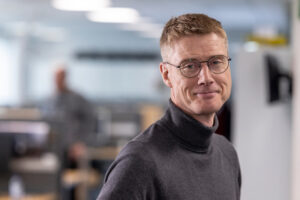
Torvald Mårtensson, Distinguished Engineer in System Integration and Test at Saab AB, Adjunct Associate Professor Linköping University
Title: Testing and Test Environments for Large-Scale Cyber-Physical Systems
Abstract: Large-scale cyber-physical systems—such as self-driving vehicles, advanced telecom infrastructure, and modern video‑surveillance platforms—combine complex software with tightly integrated electronic and mechanical components. Their scale and deep coupling with hardware introduce additional challenges for testing and for designing effective test environments. This industrial keynote provides an overview of these challenges and presents insights drawn from research studies with eleven multinational companies across the telecom, defense, logistics, surveillance, and automotive sectors. We will explore strategies for overcoming continuous integration impediments, constructing continuous integration and delivery pipelines, and involving engineers with different knowledge, skills, and personalities to improve test efficiency and effectiveness. The keynote concludes with a forward-looking discussion on emerging testing challenges posed by autonomous systems and system‑of‑systems.
Bio: Torvald Mårtensson is Technical Fellow within System Integration Testing at Saab Aeronautics. He has a background of twenty years in the aeronautics industry and another eight years in the telecom industry. At Saab, Torvald works with test management for functions and systems in the Gripen E fighter aircraft, as well as design and implementation of test environments and simulators. Torvald is also Associate Professor of Software Engineering (Senior Lecturer) at Linköping University, and is a Senior Associate Editor of the Journal of Systems and Software. He is a full member of The Royal Aeronautical Society in London. His research has primarily revolved around systems integration and system testing of large-scale and complex software systems, based on studies with multinational companies in industry segments such as telecom, defense, logistics, surveillance and automotive.
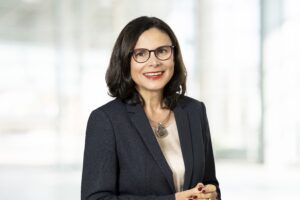
Mira Mezini, LOEWE Distinguished Professor of Computer Science, TU Darmstadt, Germany
Title: AI-assisted Programming: From Intelligent Code Completion to Foundation Models. A Twenty-Year Journey
Abstract:
From pioneering work on intelligent code completion to large language models, AI has have significant impact on software engineering over the past two decades. This talk traces the evolution of AI-assisted programming, highlighting advancements and outlining future directions. First, we’ll journey back to 2000-2010, briefly exploring pioneering applications of machine learning methods to coding tasks, in particular, the groundbreaking work from my lab on intelligent code completion, which was honored with the ACM SIGSOFT Impact Paper Award in 2024, showcasing the software engineering community’s early contributions. The second part of the talk examines the current landscape dominated by modern large language models (LLMs). Primarily driven by the ML community, these tools are being rapidly adapted by the software engineering community for various tasks. This part of the talk will highlight the pressing need for designing more reliable and specialized foundation models for software engineering tasks. Subsequently, I’ll present ongoing work from our lab focused on developing more robust foundation models for coding with the specific needs of software engineering in mind. This retrospective not only celebrates past achievements but also critically examines the present landscape, emphasizing the vital role of software engineering expertise in shaping the future of AI-assisted programming.
Bio: Prof. Dr. Mira Mezini is a LOEWE Distinguished Professor of Computer Science at TU Darmstadt, where she leads the Software Technology Lab. She served as TU Darmstadt’s provost for research and innovation (2014–2019), is a member of the executive board of the National Research Center for Applied Cybersecurity ATHENEand founding co-director of the Hessian Center for Artificial Intelligence hessian.AI.
Mezini has served on the DFG Computer Science Panel, the ERC Consolidator Grant Panel, the ACM SIGPLAN Executive Committee, and the ERC Scientific Council’s selection committee. Since 2023, she is a member of the Senate of the German Research Foundation.
Her research spans programming systems for reliable distributed software and AI, automated software analysis, and AI-assisted software development. With over 200 frequently cited publications in top software engineering and programming languages venues, she has served as program chair for ECOOP, OOPSLA, FSE, and ICSE. In 2012, she received an ERC Advanced Grant. Mezini is a member of acatech (since 2016), the Albanian Academy of Sciences (since 2023), Academia Europaea (since 2024), and Leopoldina (since 2025). She was named an ACM Fellow in 2025 and is the 2025 recipient of the senior Dahl-Nygaard Prize, recognised as one of the most prestigious prizes in the area of software engineering.
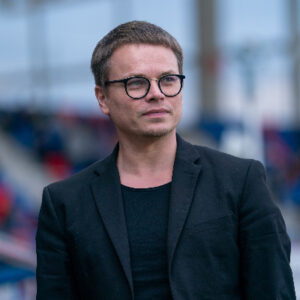
Jarosław Królewski, CEO/Founder at Synerise, Scientist at AGH University of Krakow, Poland
Title: Synerise Case Study: Engineering Teams That Ship a Billion Decisions a Day – Peopleware at Production Scale
Abstract: Delivering more than a billion real-time decisions per day is not only a challenge of distributed systems, data processing, and production infrastructure. It is also a challenge of organizational design: how engineering teams communicate, make decisions, define ownership, manage cognitive load, and respond when complex systems fail. This industry case study presents lessons from Synerise on building and evolving engineering teams responsible for large-scale, data-intensive, AI-enabled production systems. The session explores the relationship between software architecture and organizational structure, showing how system boundaries, team responsibilities, and operational practices influence delivery speed, reliability, and the ability to introduce change safely. We will examine practical approaches to balancing team autonomy with cross-organizational alignment, specialization with end-to-end ownership, and rapid delivery with production stability. Topics will include service and domain ownership, architectural decision-making, observability, incident response, deployment safety, knowledge distribution, and mechanisms for coordinating work across teams without introducing excessive process or centralized control. Particular attention will be given to cognitive and organizational bottlenecks that emerge as systems and companies grow. The case study will discuss why scaling infrastructure is often easier than scaling shared understanding, and how technical architecture, engineering culture, and management practices must evolve together. Rather than proposing a universal organizational framework, the session will present concrete trade-offs, practices that worked, approaches that required revision, and lessons learned under real production constraints. It will connect peopleware concepts with contemporary challenges in software engineering, distributed systems, AI-driven applications, and dependable production operations. Participants will leave with practical principles for designing teams and engineering environments in which people can make effective decisions under pressure, learn systematically from failure, and continuously deliver high-impact systems at production scale.
Bio: CEO and founder of Synerise – one of Europe’s most advanced and fastest-growing technology companies specializing in artificial intelligence and big data according to the Financial Times (2022, 2023). The company provides both commercial and open-source technological solutions used, among other things, in drug discovery processes. Since 2010, he has been associated with the AGH University of Krakow as a lecturer and researcher. He is also the owner and CEO of the football club TS Wisła Kraków S.A., one of Poland’s oldest and most successful football clubs, founded in 1906. In 2025, he was selected by the World Economic Forum as a member of the prestigious Young Global Leaders program. His projects have been awarded and recognised by Microsoft, Google, Deloitte, Financial Times, and EY. In 2026, he was appointed by the Prime Minister of Poland to the Council of the Future and by the President of Poland to the Business Council. Based in Kraków, Poland.
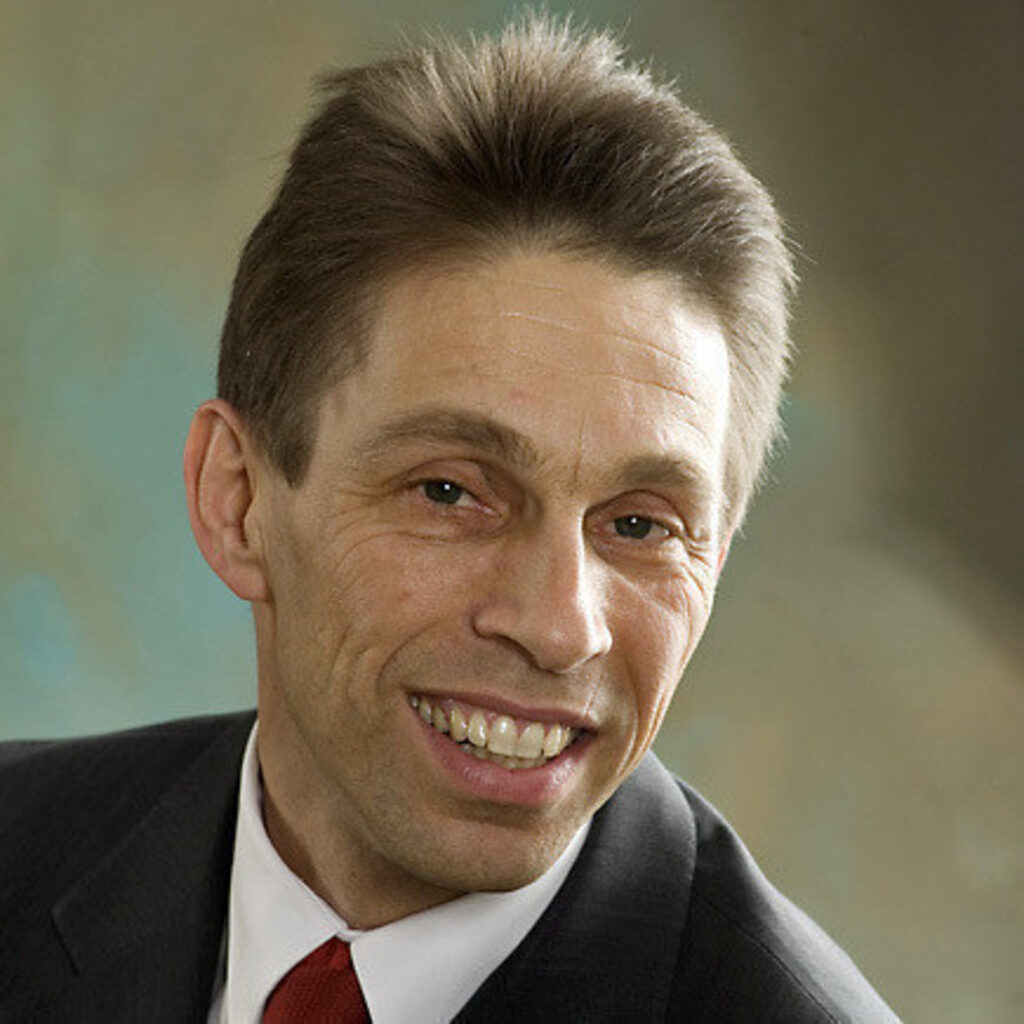
Andreas Eckel, Team Lead Innovation Projects and Funding Management at TTTech Computertechnik AG, Austria
Title: R&D at large scale in the European SDV Eco System
Abstract: The European automotive industry currently faces several paradigm shifting challengesranging from a revolution due to new AI driven development methods, the shift to eVehicles tothe immense economic pressure from far Eastern and US competitors. They are capitalizingon the Software Defined Vehicle (SDV) approach rearranging the market and revolutionizingbusiness models. European carmaker industry massively lacks behind the technological stateof the art proclaimed by these competitors and so need a strategic reply to high volumeshipment of far Eastern and US products based on innovative, competitive technologies athigh quality levels to defend their frontrunning technological lead and market share. The SDVapproach defines the vehicles of the future by innovation brought to vehicles “in the field” viauploading even new software-based functions over the air, rather than offering completely newdesigned vehicles. A viable strategy of improvement is to join forces along ecosystems reducing cost andmitigating risk as well as increasing development speed. A large-scale automotive industryfocussed R&D initiative was launched instrumentalizing European Commission funds acrossvarious European programs used as a joint platform of cooperation. In 2021 the so-called “Sherpa Group” started to form with the European Commission DGCONECT as a “neutral” institution in the lead. The aim of the Sherpa Group was to join forcesand generate a driving Eco System surpassing critical mass resulting in a movement acrossall players in the domain creating significant competitive advantages. By today this initiative created a huge ecosystem with joined forces for a coordinated approachto accelerate technology developments for the next generations of vehicles on a competitivebasis. The heart of the initiative advanced from the Sherpa Group to the newly foundedDiscussion and Advisory Forum “European Connected and Autonomous Vehicle Alliance”(ECAVA).
Bio: Andreas Eckel graduated in “communication engineering” at the Vienna University of Technology in 1991 and received an Executive MBA from California State University Hayward in 2004. Mr. Eckel also holds an MLE- (2011) and a LL.M.- (2012) degree from the IMADEC University, Vienna. He worked for space industry for 10 years (“Austrian Aerospace”, now “Beyond Gravity Austria GmbH”) in technical and managerial assignments before he joined TTTech Computertechnik AG as a business development and project manager in the area of aerospace contracts in 2002. Starting in 2012, Mr. Eckel holds the position “Teamlead Innovation Projects & Funding Management” at TTTech and was responsible for company-wide R&D projects in the grants area (EC & nationally funded projects). Mr. Eckel handed over his position as a team-lead to the next generation in Q1/2026 due to surpassing retirement age. Mr. Eckel still works as Senior Innovation Projects & Funding Manager at TTTech Computertechnik AG, where he fulfills the role of Coordinator of the Chips-JU HAL4SDV project.